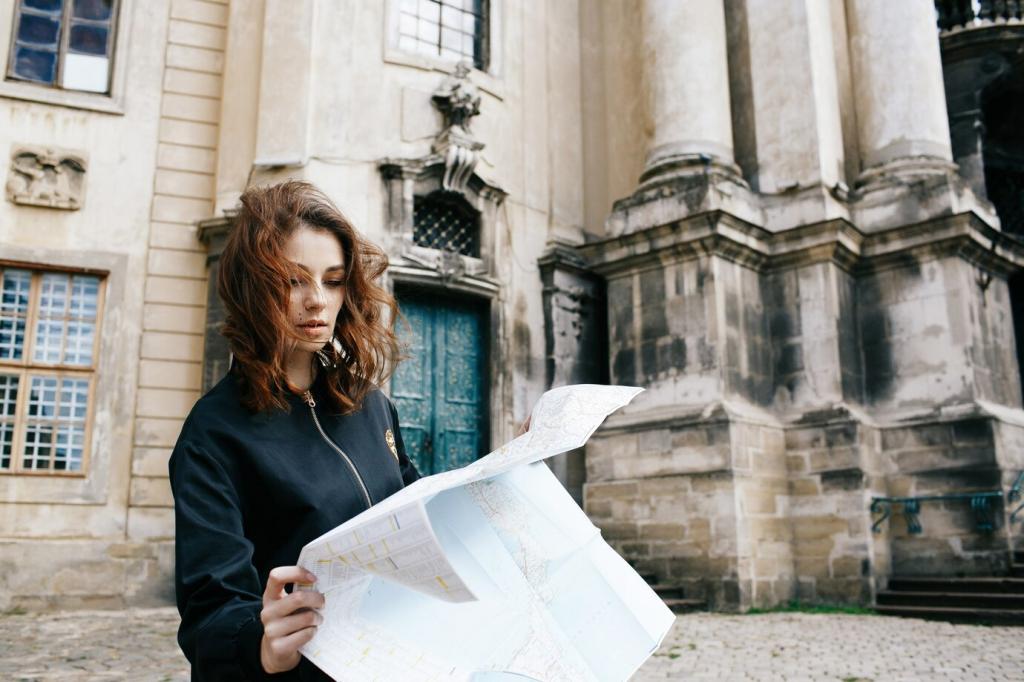
Historical Architecture Photo Walks: Wander Cities Where Time Still Speaks
Selected theme: Historical Architecture Photo Walks. Lace up your shoes, ready your lens, and step into streets that carry centuries of whispered stories—arches, courtyards, and cornices guiding your eye as you compose the city’s enduring memory.
Plan Your First Historical Architecture Photo Walk
Research Eras and Neighborhood Layers
Before you go, trace the city’s growth: medieval cores, neoclassical boulevards, and industrial fringes. Understanding timelines helps you spot stylistic fingerprints—ogival windows, pilasters, ironwork—so your walk turns into a living catalog of architectural evolution.
Make a Shot List That Tells a Story
List anchor subjects—gateways, domes, alley vistas—then add connective scenes like signage, materials, and street life. A deliberate sequence transforms scattered finds into a narrative arc, inviting viewers to stroll the timeline alongside your lens.
Pack Light, Move Far, See More
Choose one versatile lens, spare batteries, and a microfiber cloth for dusty stone. A light kit keeps you nimble when an unexpected side street reveals a frescoed ceiling or a soot-softened brick pattern catching late sun.
Compose Facades That Hold the Gaze
Stand square to arcades and let repeating curves carry perspective toward a focal point. Tilt subtly to include a keystone or date-stone, allowing converging lines to suggest procession, pilgrimage, and the passage of time within the frame.
Compose Facades That Hold the Gaze
Side light reveals chisel marks on capitals and bas-reliefs. Wait for a cloud to pass and watch ornament sharpen. Shadows can be narrative characters, hinting at absent builders while emphasizing depth on worn stair treads and cornices.
Compose Facades That Hold the Gaze
Use doorways and window mullions as natural frames, then include a sliver of street to anchor place. A gargoyle means more beside rain gutters and slate tiles, reminding viewers these creatures watched real storms for centuries.
Walk Kindly: Ethics in Historic Districts
Many façades are lived in. Step back if residents appear, avoid blocking doorways, and keep noise low. A nod and a smile open more doors than any lens, especially near early-morning deliveries or school runs.
After shooting, dig into registries and maps. A date carved above a doorway might match a tax record or guild emblem. Tie your photo to a specific craft or event to convert a decorative flourish into documented history.
Include People for Scale and Time
A passerby with an umbrella beside a Romanesque portal shows mass and mood. Ask consent when faces are identifiable, but welcome silhouettes; they place centuries-old stone in the rhythm of today’s footsteps and weather.
Sequence Like a Walking Tour
Open with an establishing streetscape, move to textures—tile, brick bond, leaded glass—then close on a reflective scene. This cadence mirrors the walk, guiding viewers from overview to intimacy and back to the city’s breathing present.
Community, Sharing, and Lifelong Learning
When you post, include architect names, styles, and construction dates if known. Ask questions—“Is this Flemish bond or English bond?”—and invite corrections. Your caption becomes a forum where expertise meets curiosity.